
Southwire

*The company referenced as “Southwire” in this essay was technically National Southwire Aluminum
On March 31, 1981, one day after the attempted assassination of President Ronald Reagan, Roy Richards, president of the Southwire Company, wrote a letter to Vice President George H.W. Bush requesting a secret meeting between the Reagan administration and Salah F. El-Haddad, Muammar Qaddafi’s brother-in-law.
Richards company had hemorrhaged $9.15 million in losses in 1981, with sales plummeting from $723 million to $606 million as the automotive industry collapsed.
Despite Libya’s designation as a state sponsor of terrorism on December 29, 1979, and the U.S. embassy closure on May 2, 1980, Richards pursued the Libyan contract as a potential lifeline for his firm.
The letter, declassified in 2007 and uploaded to the Reagan Library server on February 22, 2023, described five months of negotiations in Libya for a 120,000-ton aluminum smelter contract at Zwara. Richards requested a private diplomatic back channel “in strict confidence with no publicity.”
Southwire wanted to do business with a pariah state. They needed Washington to “look” the other way. They needed someone who could make Qaddafi’s brother-in-law presentable to the Vice President of the United States. They needed to transform a regime linked to terrorism and Soviet influence into a legitimate commercial partner.
Two days later, on April 2, 1981, Senator Mack Mattingly of Georgia forwarded Richards’s letter to the Vice President’s office. But Mattingly did something extraordinary. He delivered the letter while explicitly disavowing it.
In his cover letter, the freshman Republican senator wrote:
“I do not wish to comment on the content of this letter any further, other than to say that Herb Brown of the Southwire Company contacted me concerning the wishes of Colonel Qadhafi of Libya to make contact with the Reagan Administration through the Vice President, using Southwire as the go-between…I advised Mr. Brown and through him, the executives of Southwire that I would see that the letter was delivered to you. I also informed them that I in no way want to be connected with either the letter, its contents, or the intent of the Company in this matter. I want to express to you unequivocally that I do not, in any manner support, or condone what is being sought by the Country of Libya through the American Company of Southwire.”
Mattingly closed by noting that “No response is necessary.”
On April 15, 1981, National Security Advisor Richard V. Allen advised Vice President Bush to “shun all contact” with El-Haddad and Richards.
On April 20, 1981, Allen issued a classified memorandum to Frank Hodsoll, chairman of the National Endowment for the Arts, reiterating the same directive: “shun all contact,” in response to Hodsoll’s memo informing the DNI of Haddad’s planned visit.
Salah F. El-Haddad was Muammar Qaddafi’s “brother-in-law.” He was also Southwire’s intermediary, the man who could deliver access to the Libyan government, the man who could make the $120 million aluminum smelter deal happen.
On or about April 22, 1981, El-Haddad crashed his car. According to people with intimate knowledge of the accident, Salah was driving drunk. The car hit a bridge abutment outside Tripoli, at a late hour. The passenger, an American, was catastrophically injured.
El-Haddad suffered serious injuries in the crash, including a traumatic brain injury…he received immediate medical attention. The Libyan government arranged evacuation to Germany for treatment. A civilian medical charter was organized, likely through a European air ambulance service to avoid the diplomatic complications of a Libyan military aircraft landing in NATO airspace.
An American civilian dying as a result of drunk driving, in a country where alcohol is banned, is an international incident when the driver is the brother-in-law of the country’s flamboyant and maniacal leader.
The Libyans had to bury the incident. Not only did they possess the liability of a catastrophically injured American, the exposure to the African and Arab world of the religious infraction, at the level of leadership, erodes the devotion a dictator can receive.
Whatever knowledge the US government had of the trip, led by a Southwire executive, the evacuation to Germany and subsequent hospitalization of the individuals for two months, buried the issue as an international incident.
There was only one news article related to the accident. A BONN tabloid article published on June 23, 1981, the date the American was flown back to Atlanta, discussed the cost and basic logistics of the 65,000 Deutsche Mark flight.
The flight from Tripoli after the accident landed at a civilian airport in Germany, likely Cologne/Bonn, not the U.S. military facility at Wiesbaden Air Force Base that would be cited in later accounts. Both patients were transferred to Universitätsklinik Bonn, a major civilian hospital.
The Libyan Ambassador in Bonn took control. He contacted a well-known German aluminum industry executive, with existing business relationships with the Libyan government through cement industry supplies. The Ambassador asked the German to coordinate medical care for both patients.
All contact for the accident was made through the Libyan embassy in Bonn.
The German would later write: “I asked several times what had happened, but I did not receive a clear picture.”
While both men were in intensive care in the German hospital, on May 6, 1981, President Reagan closed the Libyan embassy in Washington and expelled all Libyan diplomats, citing terrorist ties and Libya’s pursuit of nuclear weapons.
The embassy closure created a catastrophic loss of access for post-accident discussions between the Libyan government and the American’s representatives.
It’s possible the Reagan administration (quietly) used the accident as a provocation to expel the Libyan diplomats.
Chap Chandler felt he had “duty of care” to pressure the Libyans to compensate the American’s family “for what Salah did.” This included trips to the United Nations and meetings with the Libyan official Ali Treki.
Treki was “a key figure in Muammar Gaddafi's regime for decades, he was a veteran negotiator in African and Arab affairs before breaking with the regime in 2011.”
A few years after the accident, Salah was arrested for theft. Gold bars were discovered at his home. He “disappeared.”
Jim Libby, the Carter Administration accountant carried guilt for setting up the American with Chandler.
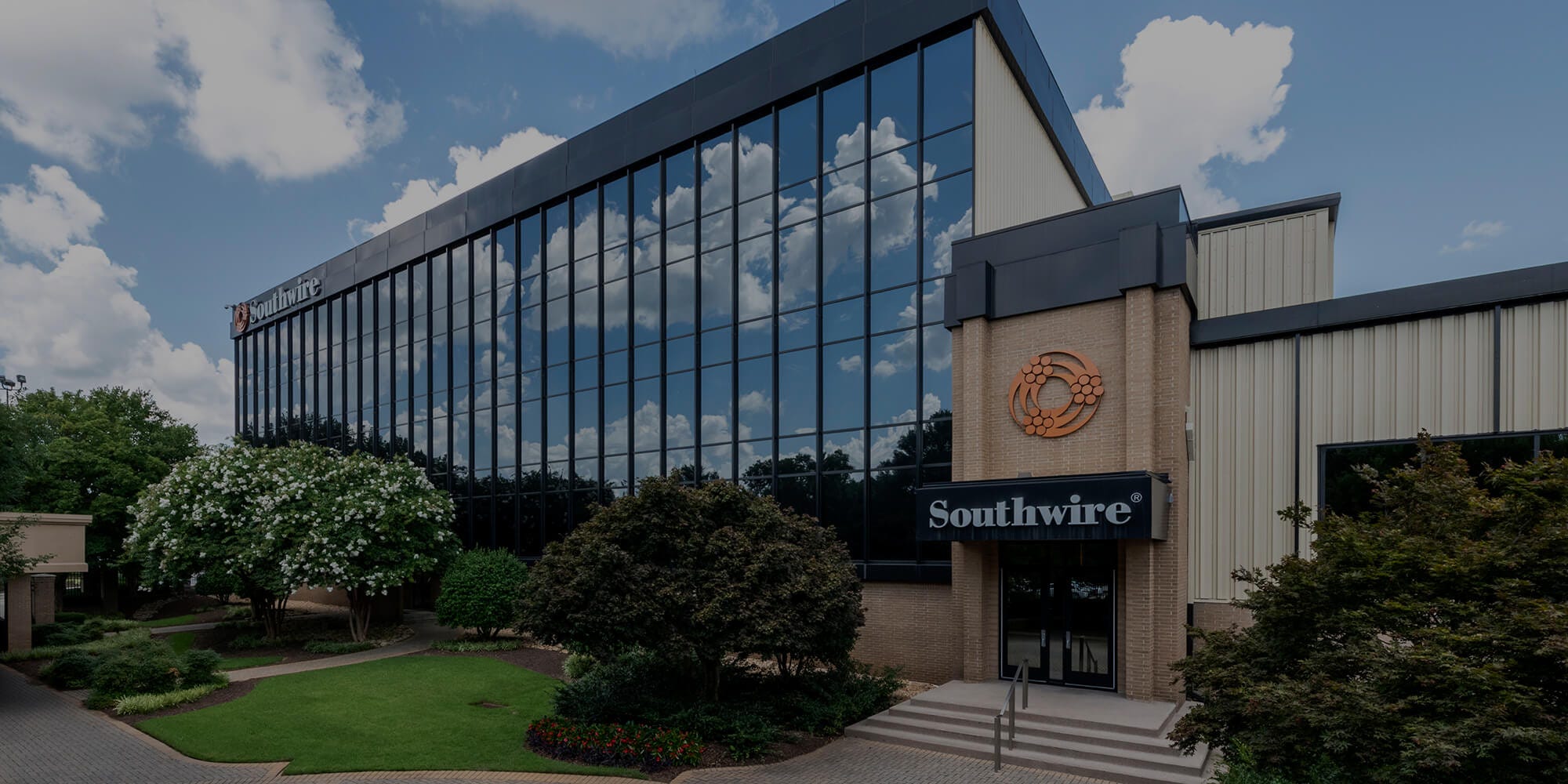
The Southwire Company was founded in 1950 by Roy Richards Sr. in Carrollton, Georgia, fifty miles west of Atlanta.
Richards started with seven employees and a single product: insulated copper wire for rural electrification. By 1981, Southwire had become one of the largest wire and cable manufacturers in North America, employing over 3,000 people across multiple facilities in Georgia.
The company’s economic footprint in Georgia was substantial. Southwire was Carrollton’s largest employer and one of the state’s major private companies. The Richards family were civic leaders, philanthropists, and significant political donors.
The company’s core business was aluminum and copper rod production for electrical cable and wire. Southwire operated its own continuous rod mills, reducing dependence on outside suppliers and allowing vertical integration from raw aluminum ingot to finished wire products. By the late 1970s, Southwire was processing hundreds of thousands of tons of aluminum annually, making the company one of the largest aluminum rod producers in the United States.
In 1981, Southwire’s corporate structure provided a critical advantage: the company was privately held by the Richards family. Unlike publicly traded corporations, Southwire had no obligation to disclose contract negotiations, international dealings, or business relationships to shareholders or the Securities and Exchange Commission. There would be no quarterly earnings calls where analysts asked uncomfortable questions about doing business with state sponsors of terrorism. No shareholder lawsuits demanding accountability for decisions that resulted in catastrophic injury to American personnel, whether they were a contractor or consultant.
Aluminum is the second most widely used metal in the world after steel. In 1981, global aluminum production exceeded 15 million tons annually. The United States was both the world’s largest producer and largest consumer, processing approximately 4.5 million tons per year.
Aluminum production follows a two-stage process. First, bauxite ore is refined into alumina (aluminum oxide) through the Bayer process. Then alumina is smelted into metallic aluminum through electrolysis, the Hall-Héroult process, which requires enormous amounts of electricity.
Smelting one ton of aluminum from alumina requires approximately 15,000 kilowatt-hours of electricity, enough to power an average American home for 18 months. This is why aluminum smelters are almost always located near cheap, abundant energy sources: hydroelectric dams, natural gas fields, or in the case of Libya, oil.
Libya in 1981 was flush with oil revenue. Qaddafi’s regime was producing approximately 1.8 million barrels per day at prices that had spiked during the 1979 oil crisis. The country was generating billions in foreign currency annually. But Libya had no domestic aluminum production. The country imported all of its aluminum products: wire, cable, construction materials, transportation components, at significant cost.
An aluminum smelter at Zwara, on Libya’s Mediterranean coast approximately 60 miles west of Tripoli, made strategic and economic sense for Libya. The country had abundant energy from oil and natural gas. It had capital from petroleum exports…what it lacked was technical expertise, industrial equipment, and international partners willing to work with an increasingly isolated regime.
The Zwara smelter project, as described in Roy Richards’s March 31 letter to Vice President Bush, was valued at $120 million, equivalent to roughly $400 million in 2026 dollars. At a capacity of 120,000 tons per year, the facility would be a medium-sized smelter by international standards, but it would make Libya self-sufficient in aluminum and position the country as a potential exporter to North Africa and Southern Europe.
The Reagan administration viewed Libya as a Soviet client state and a destabilizing force in North Africa and the Middle East. National Security Advisor Richard Allen was a hardliner on state-sponsored terrorism.
Yet…American companies continued pursuing contracts in Libya. The country had money. It had projects. And until formal sanctions were imposed, doing business with Libya was technically legal…if politically fraught and morally questionable.
Edwin Wilson, a former CIA officer, was running weapons and explosives to Libya throughout the late 1970s and into 1981. Wilson recruited former Green Berets, shipped 20 tons of C-4 plastic explosive, and helped establish training camps for Libyan operatives. In May 1980, Wilson was convicted in connection with the June 1980 assassination of Libyan dissident Faisal Zagallai in Bonn, West Germany, shot by a Libyan agent using a firearm Wilson had supplied.
Wilson was still operating in 1981. He maintained a network of former intelligence personnel, arms dealers, and corporate facilitators who moved between Washington, Europe, and Tripoli.
This was the environment Southwire was operating in: a denied area with no U.S. diplomatic presence, a regime openly linked to terrorism and Soviet influence, active weapons smuggling by former intelligence operatives, and a Reagan administration determined to isolate Qaddafi.
Southwire needed someone who could make this look legitimate. Someone who could sell the story that doing business with Qaddafi’s brother-in-law was just commerce, not collaboration with a terrorist state.
The Zwara aluminum smelter was never built.
In March 1982, the United States banned Libyan oil imports and restricted exports of oil and gas technology to Libya. American companies were prohibited from providing technical services or equipment for Libyan petroleum or industrial projects.
By 1986, the United States imposed comprehensive economic sanctions. In April 1986, Reagan ordered Operation El Dorado Canyon, air strikes against targets in Tripoli and Benghazi in retaliation for Libyan involvement in the bombing of a Berlin nightclub that killed two U.S. servicemen.
Aluminum is essential to military applications. It is lightweight, corrosion-resistant, and has a high strength-to-weight ratio. Aircraft, missiles, armored vehicles, naval vessels, and munitions all require aluminum in various forms.
During World War II, aluminum production was considered so strategic that the U.S. government built and operated smelters directly.
By the 1980s, the defense industry consumed approximately 15 percent of U.S. aluminum production. The Department of Defense maintained strategic stockpiles and closely monitored domestic production capacity.
Chap Chandler left National Southwire Aluminum in 1986 and joined his son at the export-import trading firm, Continental Concepts, Inc.
Libya eventually deposited $100,000 into a Swiss account in the name of Chip Tate, an Atlanta attorney who shared office space at Colony Square, the same mixed-use development where the injured American had lived and operated his advertising agency.
According to standard contingency arrangements for international legal settlements, Tate would have taken 40 percent ($40,000) as his fee for coordinating the Swiss transaction and navigating sanctions-evasion mechanisms. The remaining $60,000 would have been subject to federal and state income taxes.
Chap Chandler’s address book contains an entry for the American listing a Connecticut position he held from 1988 to 1991. The entry is crossed out in red.
There is no evidence of additional compensation beyond the $100,000 payment.
Roy Richards died in 1985. Chap Chandler died in 2006. Jim Libby, the accountant who traveled to Libya with Chandler and the advertising executive, has not responded to inquiries. Chip Tate, the attorney who collected the $100,000 in Switzerland, passed away in 1999.
The Southwire Corporation continues to operate as one of the largest privately held cable and wire manufacturers in North America, with annual revenues exceeding $7 billion.